Home gym equipment for a 350-pound user
Updated 2026-10-23 · By Charland & Co. · Based on published specs and public sources; we have not tested the products discussed.
Quick answer
For a 350-pound user, add your weight to the plates and bar you will load, then pick gear whose maker-rated limit sits above that total. Check each spec page. Then, for floor load, divide each item's weight (plus you, if you stand or lie on it) by that item's own footprint, and leave room to move.
Reading ratings at 350 lb
When choosing home gym equipment for a 350-pound user, the first thing to consider is the weight capacity of the equipment. This is the maximum amount of weight the equipment can safely support without risking damage or failure. For a user who weighs 350 pounds, the equipment must be able to handle at least that weight, and more to allow for added weights or movements that may increase the load.
Stability is equally important. Equipment that is not stable can shift or tip over under heavy use. Look for equipment with a wide base, heavy-duty materials, and secure mounting options. Stability is especially critical for machines like squat racks, deadlift platforms, and cable machines that are used for heavy lifting.
Picking racks and benches by rating
Not all home gym equipment is created equal. For a 350-pound user, it's essential to choose equipment that is built for heavy use and designed with safety in mind. Options include:
- Adjustable dumbbell racks: a rack's rating is for what sits on it, not your body weight; check its maker-rated shelf limit.
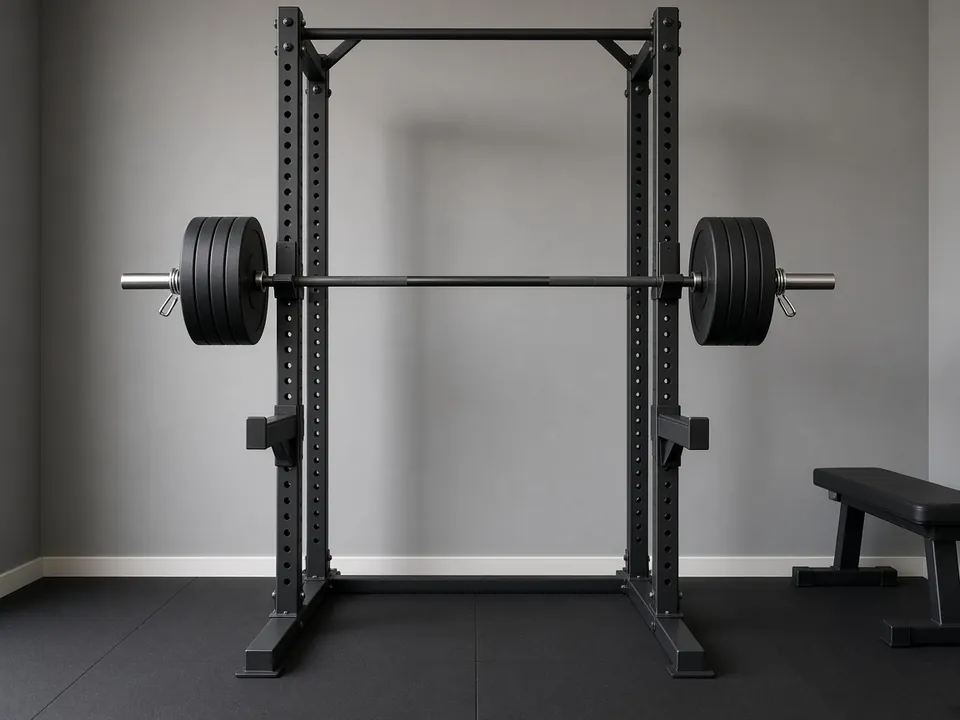
- Squat racks with heavy-duty steel frames and safety bars.
- Deadlift platforms with reinforced bases and non-slip surfaces.
- Cable machines with high weight capacity and adjustable pulley systems.
- Weight benches with thick padding and reinforced frames.
Each of these pieces of equipment should be checked for weight capacity and stability before purchase. Always refer to the maker's spec page for exact numbers, as these can vary significantly between brands and models.
Adding up the load: a worked example
Let's say you are a 350-pound user who wants to set up a home gym in a 10x10-foot space. Here's how you can calculate your equipment needs:
-
Determine the weight capacity needed:
- Your weight: 350 pounds
- Check the maker's rated user weight, and remember that plates count too. - Add your weight and whatever you load (350 + 225 = 575 lb in our example), then pick gear whose maker-rated limit is above that total. -
Check the footprint of the equipment:
- A typical adjustable dumbbell rack might be 48 inches wide and 36 inches deep.
- Convert inches to feet: 48 / 12 = 4 feet, 36 / 12 = 3 feet
- Footprint: 4 ft x 3 ft = 12 square feet -
Calculate floor load:
- 350 lb you + 225 lb bar = 575 lb on a 4 × 3 ft (12 sq ft) footprint ≈ 47.9 lb/sq ft.
- Compare this with your floor's load capacity, which you should confirm with your landlord or a structural engineer. -
Check ceiling height:
- Body weight does not change the ceiling you need. Plan the equipment's listed height plus 12 inches (our planning rule of thumb).
- For overhead moves, plan roughly your height plus about 2 feet (our planning estimate, not a measured figure): about 8 feet for a 6-foot person. -
Check stability:
- Look for equipment with wide bases, heavy-duty materials, and secure mounting options.
- For example, a squat rack with a steel frame and safety bars is a good choice.
This worked example shows how to calculate the needs of a 350-pound user in a 10x10-foot space. Always verify the maker's spec page for exact numbers and consult a structural engineer if you're unsure about your floor's load capacity.
Rating mistakes at 350 lb
When choosing home gym equipment for a 350-pound user, it's easy to make mistakes that can compromise safety and performance. Here are some common mistakes to avoid:
- Choosing equipment with a low weight capacity: A rack or bench loaded past its rating can bend or tip. Add your weight and whatever you load (350 + 225 = 575 lb in our example), then pick gear whose maker-rated limit is above that total.
- Ignoring stability: Equipment that is not stable can shift or tip over. Look for equipment with a wide base and heavy-duty materials.
- Not checking the floor load capacity: If your floor cannot support the weight of the equipment and user, it can be damaged. Always check with your landlord or a structural engineer.
- Choosing the wrong layout: A poor layout can make it difficult to move around the gym or use the equipment safely. Always plan your layout carefully.
Avoiding these mistakes can help check that your home gym is both safe and functional.
Planning numbers: total load
| Part | Example |
|---|---|
| You | 350 lb |
| Loaded bar and plates | 225 lb |
| Total the bench or rack must carry | 575 lb |
Use the maker's listed capacity, not a typical figure.
Questions about gear for a 350-pound user
Q: What is the minimum weight capacity for home gym equipment for a 350-pound user?
A: Add your weight and whatever you load (350 + 225 = 575 lb in our example), then pick gear whose maker-rated limit is above that total. Always check the maker's spec page for exact numbers.
Q: Can I use a standard dumbbell rack for a 350-pound user?
A: A rack's rating is for what sits on it, not your body weight; check its maker-rated shelf limit.
Q: What is the best type of floor for a 350-pound user?
A: A ground-level concrete slab is usually the simplest option. On any upper or wooden floor, ask your landlord or a structural engineer to confirm the floor's capacity.
Q: How do I check the floor load capacity of my home?
A: You can check the floor load capacity by consulting your landlord or a structural engineer. A floor load calculator estimates your load, not the floor's capacity.
Related guides
- How to Measure Your Space for a Home Gym
- Home Gym Equipment That Fits Small Spaces
- How to Choose Home Gym Equipment for a Studio Apartment
- How to Choose Home Gym Equipment for a Garage
- How to Calculate Weight Capacity for Home Gym Equipment
This guide provides a comprehensive overview of how to choose home gym equipment for a 350-pound user. By focusing on weight capacity, stability, and space requirements, you can check that your home gym is both safe and functional. Always check the maker's spec page for exact numbers and consult a structural engineer if you're unsure about your floor's load capacity. With the right equipment and layout, you can create a home gym that meets your needs and supports your fitness goals.
Sources and method
- International Residential Code, Table R301.5 (minimum uniformly distributed live loads), as adopted in WAC 51-51-0301: 40 psf for areas other than sleeping areas and 30 psf for sleeping areas (local amendments vary).
- ICC Digital Codes: IRC 2018 Section R301.5: official text of the residential live-load table
- CPSC: Anchor It! furniture and TV tip-over prevention: why tall, heavy items should be anchored to the wall
- Factors and planning values on this page are TinyGymGuide example values (see Sources & method), not measured or maker figures.